How to Transition a Cat to New Food Gradually (7-Day Vet Plan)
I spent the better part of a morning scrubbing orange-speckled vomit out of a cream-colored rug because I thought I could skip the slow transition and just dump a new bag of kibble into my cat’s bowl. That was the last time I underestimated a cat’s digestive system. Two days of refusal, one bout of diarrhea, and a vet bill later, I learned the hard way that a gradual food switch isn’t a suggestion—it’s survival. Here’s the exact seven-day plan my veterinarian gave me, with the real-world tweaks I’ve used ever since.
Why a Slow Cat Food Transition Isn’t Optional—It’s Survival
Cats have short, sensitive digestive tracts that evolved for a consistent, prey-based diet. When you suddenly change the protein source, fat content, or fiber profile, their gut bacteria don’t get a memo—they get shocked. The result can range from a cat who simply sniffs and walks away to full-blown vomiting, diarrhea, or even pancreatitis in extreme cases. According to the American Veterinary Medical Association, a gradual transition over at least seven days gives the gastrointestinal system time to adjust enzyme production and bacterial populations. In my own experience, rushing a change from a chicken-based kibble to a salmon pâté led to three days of loose stool and a cat who hid under the bed. The slow plan isn’t just gentler; it’s the only way to avoid a mess you’ll be cleaning up for days.
The 7-Day Vet-Approved Transition Schedule (Day-by-Day Breakdown)
Every cat is an individual, but this schedule works as a reliable starting point. I’ve used it with four fosters and my own picky tortoiseshell, and it has never failed when followed strictly. Measure food by weight, not volume—a kitchen scale costs ten dollars and saves guesswork. Keep meal times consistent, and always offer fresh water alongside the bowl.
Days 1–2: 75% Old Food, 25% New Food
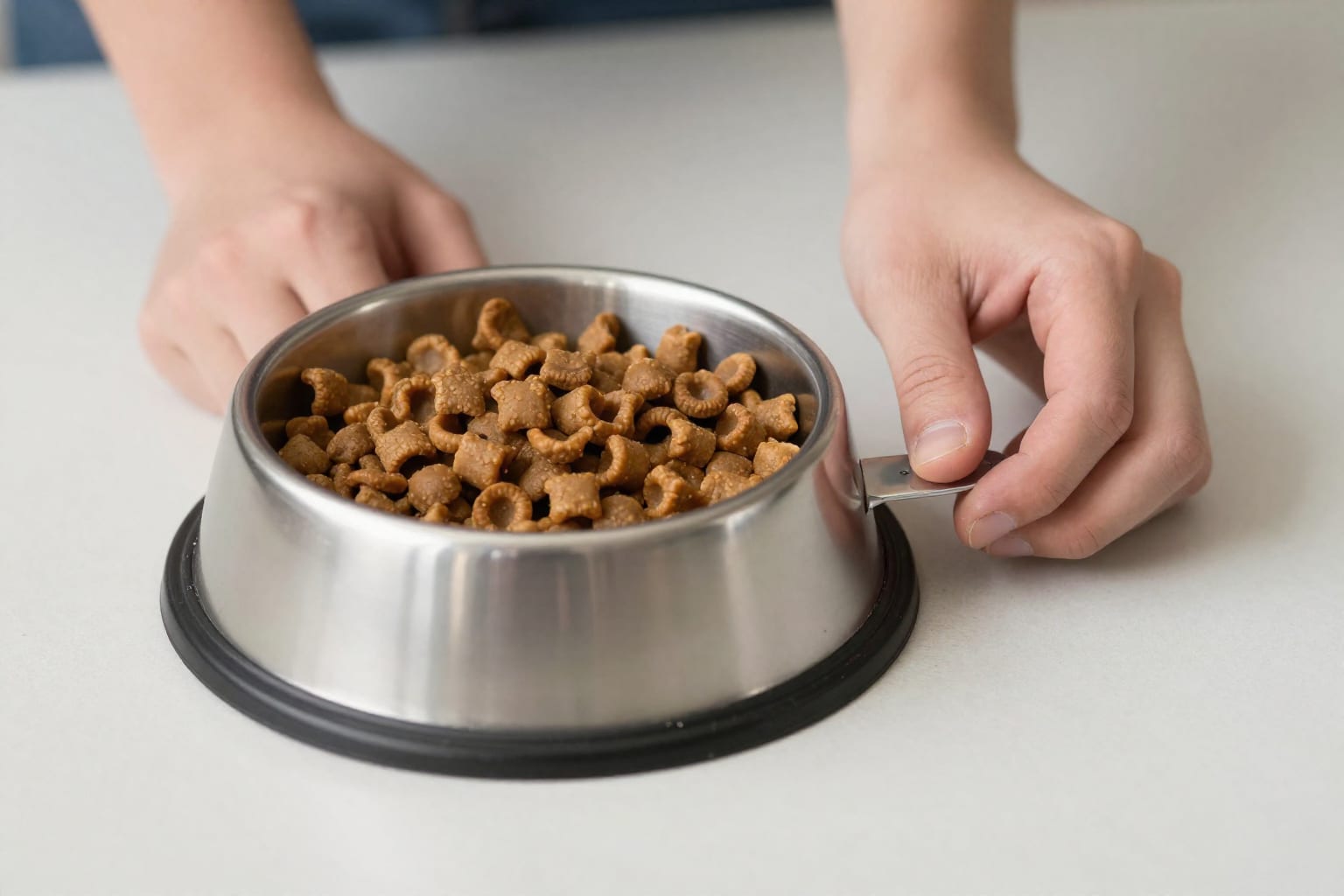
Start with three-quarters of the usual portion of the old food and one-quarter of the new. Mix them thoroughly so your cat can’t easily pick out the new bits. Watch appetite closely—if she eats everything, great. If she leaves the new food behind, try warming the mixture for ten seconds in the microwave (stir well to avoid hot spots) to release aroma. Stool should remain firm. If it softens, stay at this ratio an extra day before moving forward.
Days 3–4: 50% Old Food, 50% New Food
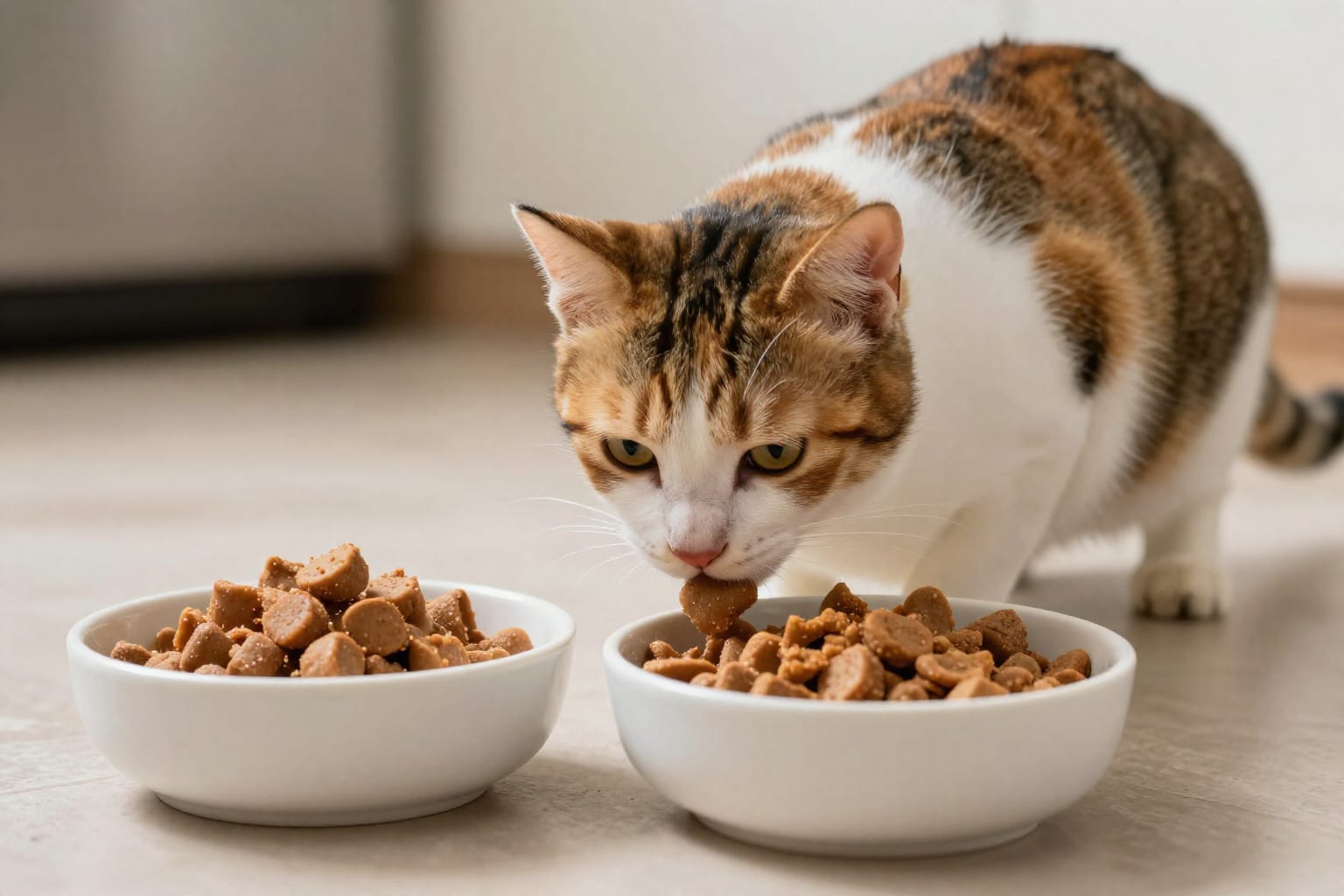
At the halfway point, your cat’s gut has had a few days to produce more of the enzymes needed for the new ingredients. Mix equal parts by weight. This is where I’ve seen most cats either accept the blend or start showing hesitation. If your cat eats half and leaves the rest, don’t panic—she may just need a smaller portion at this ratio. Stool that’s slightly soft but still formed is normal; watery or frequent stools mean you should pause for two extra days at this ratio before proceeding.
Days 5–6: 25% Old Food, 75% New Food
This is the final push. Most cats are ready by now, but picky eaters may start skipping meals because the old food is nearly gone. If your cat refuses a meal, don’t replace it with treats. Instead, sprinkle a tiny amount of freeze-dried chicken (no additives) on top or add a spoonful of warm water to make a gravy. I once had a foster who flat-out refused any bowl with more than 50% new food; I extended this stage to four days by adding a probiotic powder recommended by my vet, and she eventually accepted the full switch on day nine.
Day 7: Full Switch to New Food (and What If It Fails)
Serve 100% new food. If your cat eats it with no issues, congratulations—you’re done. If she turns up her nose or develops loose stool, don’t force it. Drop back to the previous ratio for three more days, then try again. Some cats, especially seniors or those with chronic digestive conditions, need a 10- to 14-day plan. That’s fine. The goal is acceptance, not speed.
What to Do If Your Cat Refuses the New Food or Gets Diarrhea
Two common problems derail transitions: refusal and digestive upset. For refusal, try texture swaps. My cat, Leo, will eat pâté but turns his nose at shreds, even if they’re the same brand and protein. If your cat ignores the new food, offer a different texture within the same line—many brands sell both pâté and minced varieties. Warming, adding a drop of fish oil (check with your vet first), or mixing in a teaspoon of plain pumpkin puree (not pie filling) can also tempt a stubborn eater.
For diarrhea, stop the transition immediately and return to 100% old food until stools firm up, then restart from day one. Cornell Feline Health Center notes that loose stool during a transition is usually temporary, but if it persists beyond 48 hours, a vet visit is warranted to rule out food sensitivity or infection. In my own household, I keep a probiotic paste in the fridge for just such occasions—it’s helped two fosters bounce back within a day.
Choosing the Right New Food: Flavor, Texture, and Nutritional Fit
Not all foods transition equally. If you’re switching from chicken to salmon, the different protein source alone can cause more resistance than if you stay within the same protein family (chicken to turkey, for example). Similarly, a cat used to crunchy kibble may reject soft wet food outright—or vice versa. Match texture as closely as possible to what your cat already eats. When I switched my own cat from a supermarket brand to a limited-ingredient diet, I chose a poultry-based recipe with a similar kibble shape and size, and the transition was seamless.
Read the ingredient list for fat content, too. A sudden jump from 8% fat to 18% can trigger loose stool even with a slow transition. Aim for a new food that’s within a few percentage points of the old one on crude fat and fiber. Life-stage matters: kittens need higher calorie density, seniors often benefit from lower phosphorus. If your cat has a known health condition, such as kidney disease or diabetes, always get the vet’s input before choosing a new diet.
When a Gradual Transition Isn’t Enough: Medical Reasons to Switch Quickly
Rarely, a veterinarian may recommend a faster switch—for example, if your cat is diagnosed with urinary crystals and needs an immediate prescription diet to dissolve them, or if a food allergy is causing severe itching or vomiting. In those cases, follow your vet’s instructions exactly. Even then, they may suggest mixing the prescription food with the old food for just one or two days rather than skipping the transition entirely. No responsible professional will tell you to cold-turkey a food change unless the medical risk of the current diet outweighs the digestive upset of a quick switch. Always verify with your own veterinarian before deviating from the gradual plan.
Practical Takeaway: Keep a food journal during the transition—note ratios, stool quality, and appetite each day. That record will tell you exactly when to pause, when to push forward, and when to call the vet. And if you’re tempted to skip the slow route, just picture that orange-speckled rug. It’s not worth it.